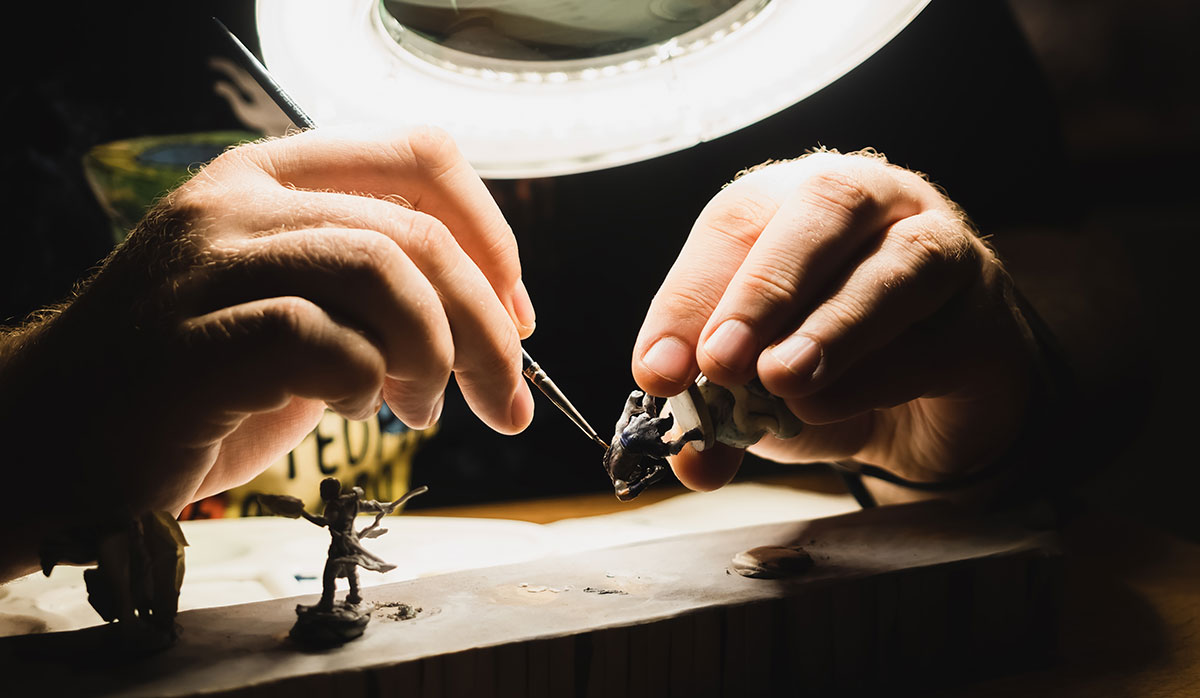
Tabletop miniature painting is not something you rush into. When I first got into painting Warhammer 40K miniatures, I had no idea how much patience it would demand from me. At the time, I was looking for a creative outlet, something I could do with my hands that would also let my mind slow down. What I found instead was a quiet teacher. Miniature painting taught me how to focus, how to commit, and how to see value in progress that unfolds slowly over time.
Learning to Sit with One Task
In a world full of distractions, sitting down to paint a single miniature feels almost rebellious. There is no quick payoff. You are working on something that might take hours or days to complete, sometimes longer if you are being careful. Early on, I struggled with this. I wanted to finish pieces quickly, to see results right away. But miniature painting does not reward impatience.
Each figure requires attention to detail. You start with priming, then base colors, then layering, shading, and highlights. Skipping steps shows immediately. The process forces you to stay present and committed to a single task. Over time, I noticed that my ability to focus improved. I became more comfortable sitting quietly, working steadily, and resisting the urge to rush ahead.
Follow Through Over Motivation
One of the biggest lessons miniature painting taught me is the difference between motivation and follow through. Motivation comes and goes. Some days you feel excited to paint, and other days the idea of picking up a brush feels exhausting. If you rely on motivation alone, most projects will remain unfinished.
Painting miniatures taught me that progress happens when you show up anyway. Even painting for fifteen minutes counts. Sometimes that small effort leads to more time at the desk. Other times, it is enough just to move the project forward a little. Over weeks and months, those small sessions add up. This mindset has influenced how I approach other areas of life, including parenting, creative work, and personal growth.
Accepting Imperfect Progress
Not every miniature turns out the way I imagined. Paint goes where it should not. Highlights are uneven. Color choices do not always work together. Early on, these mistakes frustrated me. I would feel tempted to scrap a project or start over entirely.
Eventually, I learned that imperfections are part of the process. Each mistake teaches something. Every finished miniature is better than an unfinished one sitting on the shelf. Accepting imperfect progress allowed me to keep moving forward instead of getting stuck. This lesson applies far beyond painting. Life rarely unfolds perfectly, and waiting for ideal conditions often means waiting forever.
Building Patience Through Repetition
Miniature painting involves repetition. You paint the same armor plates, weapons, and textures over and over again. At first, this repetition feels tedious. Over time, it becomes calming. The repeated motions build muscle memory and confidence. You start to see improvement without consciously trying.
This repetition builds patience in a quiet, steady way. It teaches you that mastery comes from consistency, not shortcuts. Whether I am learning a new painting technique or navigating the daily routines of parenting, the same principle applies. Small, repeated actions shape long term results.
Creating Without Pressure
One of the most freeing aspects of miniature painting is that it does not demand productivity in the traditional sense. There are no deadlines, no performance reviews, and no external expectations. The only goal is to create something you enjoy working on.
This lack of pressure allowed me to reconnect with creativity in a healthier way. I was not trying to impress anyone. I was simply engaging with the process. That mindset has influenced how I approach other creative hobbies like watercolor painting and music. Creating for its own sake is deeply rewarding.
Carrying the Lessons into Daily Life
The lessons from miniature painting have quietly shaped how I live my life. As a stay at home dad, focus and follow through matter. Many tasks are repetitive and often go unnoticed. Progress is gradual. Results are not always visible right away. Miniature painting reminded me that consistency matters, even when recognition does not come immediately.
It also taught me to value long term growth over instant gratification. Whether I am helping my kids learn new skills or working on a personal project, I am more patient with the process. I understand that meaningful progress takes time.
Why the Long Game Matters
Tabletop miniature painting is not just a hobby for me. It is a practice in patience, focus, and commitment. It reminds me that the long game is worth playing. Finishing a miniature feels satisfying not because it is perfect, but because it represents time, effort, and follow through.
In a world that constantly pushes speed and convenience, miniature painting offers a different rhythm. It encourages slowing down, paying attention, and staying with a task until it is complete. Those lessons extend far beyond the painting desk.
Miniature painting taught me how to stay focused when progress feels slow and how to follow through even when motivation fades. It showed me the value of imperfect progress and the power of consistency. Most importantly, it reminded me that meaningful work often happens quietly, one small step at a time.
The long game is not flashy, but it is rewarding. Whether in art, parenting, or personal growth, learning to commit and stay present has made my life richer and more grounded. And sometimes, all it takes to remember that is a small plastic figure, a paintbrush, and the willingness to keep going.